What Is a Geotechnical Investigation and Why Does Your Construction Project Need One?
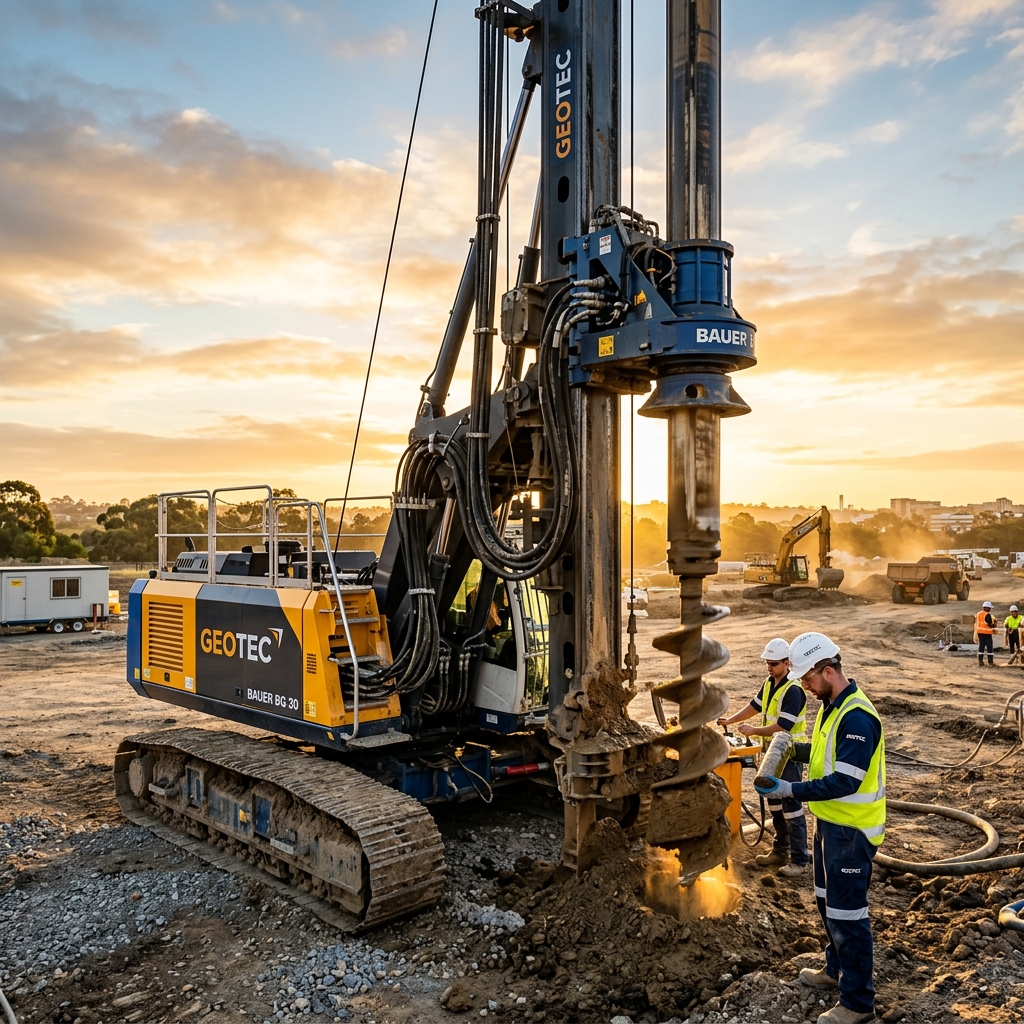
Imagine spending crores on a building, only to find out later that the ground beneath it was never properly studied. It sounds like a nightmare, but it happens more often than you'd think. Across India, construction projects — from residential apartments to highway bridges — face delays, structural failures, and massive cost overruns because the soil conditions were assumed rather than investigated.
That's exactly where a geotechnical investigation comes in. If you're a developer, builder, contractor, or project manager, this blog will give you a clear, practical understanding of what geotechnical investigation is, what it involves, and — most importantly — why skipping it can be one of the costliest mistakes you ever make.
So, What Exactly Is a Geotechnical Investigation?
In simple terms, a geotechnical investigation is a systematic process of studying the ground conditions at a construction site. It involves collecting soil and rock samples, running field and laboratory tests, and analysing the data to understand how the ground will behave under the load of your structure.
Think of it as a health check-up — but for the earth your building is going to stand on.
The output of this process is a Site Investigation Report (also called a Geotechnical Report or Soil Investigation Report), which your structural engineer and foundation designer will use to make critical decisions about your project.
What Does a Geotechnical Investigation Actually Involve?
A thorough geotechnical investigation is not just about digging a few holes. It's a multi-stage process that typically includes the following:
1. Desk Study and Site Reconnaissance
Before any equipment hits the ground, geotechnical engineers review existing geological maps, historical records, and previous land-use data. A site visit helps identify visible issues like poor drainage, filled land, proximity to water bodies, or signs of previous construction activity.
2. Subsurface Exploration (Boring & Trial Pits)
This is the core of any geotechnical investigation. Boreholes are drilled at strategic locations across your site to collect undisturbed soil samples and assess underground conditions. The Standard Penetration Test (SPT) is one of the most commonly used tests during this phase, helping engineers measure the density and strength of the soil at various depths.
3. Laboratory Testing (Soil Testing for Construction)
The collected samples are sent to a geotechnical laboratory for detailed analysis. Common soil tests for construction include:
- Grain size analysis (to classify soil type)
- Atterberg limits (to determine soil plasticity)
- Compaction tests (Proctor test)
- Shear strength tests (Triaxial, Direct Shear)
- Consolidation tests (to assess settlement potential)
- Chemical tests (pH, sulphate content — important for concrete durability)
4. In-Situ Tests
Beyond lab work, in-situ field tests such as the Plate Load Test, Permeability Test, and Vane Shear Test give real-time data about how the soil behaves in its natural state — data that cannot always be replicated in a laboratory.
5. Preparation of the Site Investigation Report
All findings are compiled into a comprehensive Site Investigation Report. This document presents the soil profile, test results, groundwater table depth, and — most critically — recommendations for foundation type and design parameters. It becomes one of the most important documents in your entire construction project.
Why Does Your Construction Project Need a Geotechnical Investigation?
Let's be direct — this is not optional if you want a safe, cost-effective, and legally sound construction project. Here's why:
It Prevents Foundation Failures
Foundation failures don't just mean cracks in the wall. They can mean the complete collapse of a structure. Soft soils, expansive clays, loose fill, or high water tables — all of these can cause serious structural problems if not identified beforehand. A proper geotechnical investigation tells your engineer exactly what kind of foundation is safe: a simple shallow footing, a raft foundation, or deep piles.
It Saves You Money in the Long Run
Many builders try to cut corners by skipping or under-budgeting soil investigation, but this is short-term thinking. Discovering poor soil conditions after construction has begun — or worse, after the structure is built — is exponentially more expensive to fix. A geotechnical investigation typically costs a fraction of the overall project budget, yet it can save lakhs or crores in remediation costs.
It Helps You Meet Regulatory Requirements
In India, most municipal authorities and statutory bodies — including RERA, NBCC, and state PWDs — require a geotechnical or soil investigation report as part of the building approval process. Without it, you may not even get your construction permit approved. For infrastructure projects, compliance with IS codes (such as IS 1892 for site investigation and IS 2131 for SPT) is mandatory.
It Optimises Your Foundation Design
Without accurate soil data, engineers are forced to over-design foundations as a safety buffer — meaning you spend more on concrete and steel than you need to. With a proper site investigation report, engineers can design foundations that are safe without being unnecessarily expensive. This kind of value engineering is only possible when you have reliable ground data.
It Informs Risk Management
Every site has hidden risks — whether it's contaminated soil, underground voids, shallow bedrock, or waterlogged zones. A geotechnical investigation surfaces these risks before they become problems. For project managers and developers, this is critical for scheduling, budgeting, and managing contractor expectations.
Who Needs a Geotechnical Investigation?
The short answer: anyone who builds on the ground.
More specifically, geotechnical investigations are essential for:
- Residential buildings (especially multi-storey)
- Commercial complexes and malls
- Industrial plants and warehouses
- Roads, highways, and flyovers
- Bridges and culverts
- Dams and embankments
- Solar farms and wind energy installations
- Retaining walls and slope stabilisation projects
If you're in any of these categories and haven't commissioned a soil investigation yet, now is the right time.
Common Misconceptions About Geotechnical Investigation
"My neighbour built here without it and nothing happened."
Soil conditions can vary dramatically even within a short distance. Just because one plot was fine doesn't mean yours will be. There are countless cases in India where adjacent buildings have experienced very different settlement or failure patterns because of localised soil variability.
"It's too expensive."
A basic geotechnical investigation for a residential plot typically costs between ₹15,000 and ₹80,000 depending on the scope and number of boreholes — a small fraction of total construction costs. Compare this to the cost of underpinning a failed foundation, which can run into lakhs, and the argument for cutting this cost falls apart quickly.
"We can tell what the soil is like just by looking."
Visual assessment of the ground surface gives you almost no useful information about what lies beneath at foundation depth — which can be 1.5 to 20+ metres depending on the structure. Soft layers, pockets of loose soil, or perched water tables are completely invisible to the naked eye.
What to Expect From a Quality Site Investigation Report
A well-prepared site investigation report should include:
- Project and site details
- Borehole location plan
- Borehole logs with soil profile descriptions
- Laboratory test results (tabulated)
- Groundwater table levels
- Safe Bearing Capacity (SBC) values at different depths
- Recommended foundation type and depth
- Settlement analysis
- Special observations (if any — e.g., presence of fill, contamination, etc.)
If a report you've received doesn't include most of these elements, it may not give your structural team enough information to work with safely.
Final Thoughts: Don't Build Blind
Geotechnical investigation isn't a bureaucratic formality or an unnecessary expense. It's one of the most important investments you can make at the start of any construction project. It tells you the truth about the ground you're building on — and in construction, the ground is everything.
Whether you're developing a housing colony in Ghaziabad, constructing a factory in Noida, building an infrastructure project in Uttar Pradesh, or undertaking any construction work across India — a thorough geotechnical investigation and a properly prepared site investigation report should be non-negotiable parts of your project plan.
At Terratech Engineers, we provide comprehensive geotechnical investigation services, soil testing for construction, and detailed site investigation reports that give your project team the data and confidence they need from day one.
Get in Touch with Terratech Engineers
Planning a construction project and need a reliable geotechnical investigation partner? Contact us today for a free consultation. Our experienced team of geotechnical engineers and land surveyors is ready to help you build on solid ground — literally.
www.terratechengineers.in | Ghaziabad, Uttar Pradesh, India